When Hitting Pause Is the Most Musical Thing You Can Do
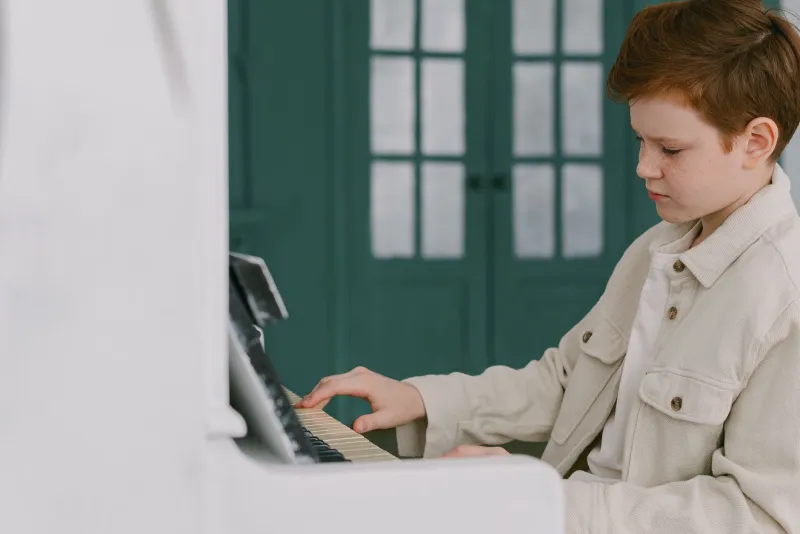
There's a moment a lot of music parents know well. Your child used to sprint to the piano bench. Now they drag their feet. Practice sessions have turned into standoffs. And then one afternoon, their teacher gently suggests something that stops you cold: maybe it's time for a break.
Your stomach drops. You wonder if you've failed somehow. You start doing math in your head — all those lessons, all that money, all those Saturday mornings spent driving across Katy to get here. And now... just stop?
Here's the thing nobody tells you at the beginning: sometimes pausing is exactly the right move. Not a defeat. Not a waste. Just a breath.
The Difference Between "I Don't Want To" and "I Can't Anymore"
Every kid pushes back against practice at some point. That's normal. Music is hard. It asks for patience and repetition in a world that mostly rewards instant results. A little resistance doesn't mean your child is done with music — it might just mean they're frustrated with a tricky piece, or tired from a busy school week, or going through a phase where everything feels like too much.
Burnout is different. It's quieter, and it runs deeper.
Burnout looks like a child who used to light up during lessons but now sits through them with blank eyes. It's the student who practices mechanically, without any trace of the curiosity that was once there. It's the kid who stops talking about music entirely — doesn't hum anymore, doesn't notice songs on the radio, doesn't ask to watch concert videos on YouTube.
When the joy doesn't just dip but disappears, that's worth paying attention to.
What Teachers Are Really Saying When They Suggest a Break
A good music teacher doesn't make this recommendation lightly. If your child's instructor has brought it up, they've probably been watching the signs for a while. Teachers see things parents sometimes can't — they notice when a student stops engaging mid-lesson, when the progress that once came steadily has stalled not from lack of talent but from lack of fuel.
Suggesting a break isn't a teacher giving up on your child. It's a teacher respecting them enough to be honest. Music instruction works best when a student has some internal drive pushing them forward. When that drive goes dark, continuing lessons can actually do more harm than good — it can turn something that was once a source of joy into something a child associates with stress, obligation, and failure.
The goal at a place like Katy Music Lessons has always been to help students build a genuine relationship with music — one that lasts a lifetime. That kind of relationship can't be forced. Sometimes it needs room to breathe.
Signs It Might Be Time to Step Back
Not sure whether you're looking at a rough patch or something more serious? Here are some concrete things to watch for:
- Consistent dread before every single lesson, not just occasional grumbling
- Physical complaints — stomachaches, headaches — that conveniently appear on lesson days
- A complete loss of self-directed musical activity (no more singing, no more picking out songs by ear, no interest in music at all)
- Emotional meltdowns during or after practice that go beyond normal frustration
- A student who says outright that they hate music — and means it, repeatedly, over weeks
- A sudden drop in self-esteem tied specifically to their musical identity
One or two of these on a hard week? Probably just a rough patch. Several of them, consistently, over a month or more? That's a signal worth taking seriously.
How to Take a Break Without Losing the Music
Stepping away from formal lessons doesn't have to mean stepping away from music entirely. In fact, a well-handled break can actually rekindle something that structured lessons were starting to smother.
Keep music in the environment, not on the schedule. Play music at home — in the car, at dinner, on weekend mornings. Don't make it a lesson. Just let it exist as part of daily life. Kids who grow up surrounded by music tend to find their way back to it.
Let them lead. If your child picks up their instrument on their own during the break, resist the urge to turn it into an impromptu practice session. Just let them play. Even ten minutes of noodling around without any pressure is valuable.
Explore music in low-stakes ways. Go to a free outdoor concert in the park. Watch a documentary about a musician they admire. Attend a recital at their school, just as an audience member. Keep the door open without pushing anyone through it.
Set a soft check-in date. Rather than an open-ended pause that quietly becomes permanent, agree together — parent, child, and teacher — on a time to revisit the conversation. Three months is a reasonable window. It's long enough to reset, short enough that the skills don't evaporate entirely.
Releasing the Guilt
This might be the hardest part for parents: letting go of the feeling that taking a break means you've somehow failed your child's musical future.
You haven't.
The most musical adults you know didn't all have uninterrupted lesson schedules from age five through high school. Many of them took breaks. Some quit entirely for a few years and came back with more hunger than they'd ever had before. Music has a way of finding people who love it, even when they wander off for a while.
What matters most isn't the continuity of the schedule. It's the relationship your child has with music when they're thirty, or forty, or sixty. A break taken at the right moment — with care and intention — can protect that relationship in ways that pushing through never could.
Trust your instincts. Trust your child's teacher. And trust that music, when it's meant to be part of someone's story, has a way of sticking around — even through the quiet chapters.

