Why the Song Your Child Plays at the Recital Is Actually a Really Big Deal
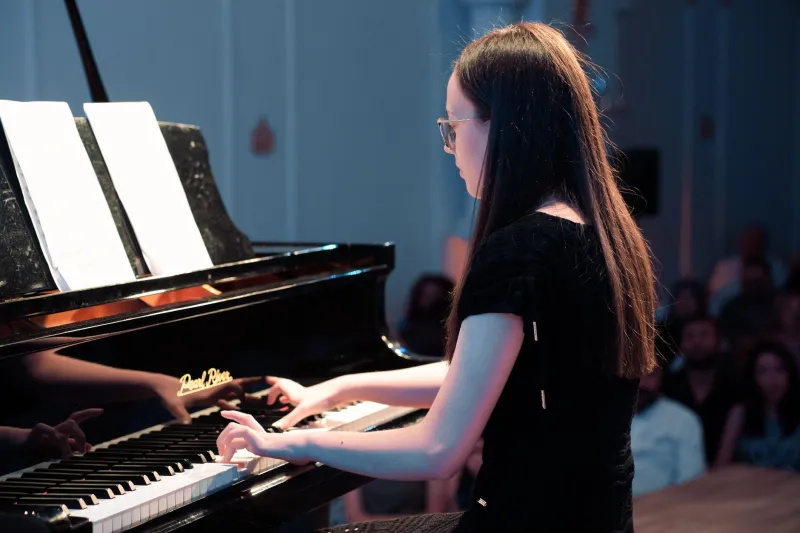
Most parents sitting in a school auditorium or church fellowship hall for a student recital are focused on one thing: hoping their kid doesn't freeze up. Fair enough. But while you're mentally coaching your child through the opening bars from the third row, something much bigger is quietly unfolding onstage.
The piece your child is performing — that specific melody, that particular arrangement, that exact level of technical challenge — wasn't chosen by accident. And the reasons behind that choice have a lot more to do with your child's long-term relationship with music than you might expect.
A Song Can Shape a Student's Whole Musical Identity
Here's a thought experiment: think back to the first piece of music you truly loved playing, singing, or even just listening to obsessively. Chances are it left a mark. Maybe it made you feel capable of something you didn't think you could do. Maybe it opened a door to a genre you'd never explored. Maybe it just felt like you in a way that nothing else quite did.
That's the power teachers at Katy Music Lessons are tapping into every time they assign a recital piece.
"I spend a lot of time thinking about what a student needs emotionally, not just technically," says one instructor who has been teaching piano in the Katy area for over a decade. "A recital piece isn't just about showing off what they've learned. It's about giving them a story to tell — one that feels true to who they are right now."
When a student connects with their material, the performance transforms. The nerves are still there, but they're accompanied by something else: genuine investment. A child who cares about the song they're playing will practice differently, perform differently, and remember that moment differently.
The Psychology Behind the Pick
Music educators and researchers have long understood that motivation and identity are deeply intertwined. When students perform music that resonates with them — whether because it's a little challenging, emotionally meaningful, or simply sounds cool to their ears — they're more likely to push through difficulty, stay engaged during practice, and build a lasting sense of themselves as musicians.
Conversely, a piece that feels completely disconnected from a student's taste or experience can quietly erode that sense of belonging. It sends an unintentional message: music is something that happens to you, not something you own.
Teachers navigate this constantly. The goal isn't to assign only what a student already loves — that would flatten the learning curve entirely. The sweet spot is a piece that stretches a student just enough while still feeling accessible, exciting, or emotionally alive to them.
"I had a student who was really into video game music," another Katy-based instructor shared. "I found an arrangement of a theme from one of his favorite games that was actually quite technically demanding. He didn't even notice how hard he was working because he was so motivated to nail something he already loved."
What Teachers Are Actually Looking For
When your child's teacher selects a recital piece, they're running through a mental checklist that goes well beyond "can they play this by the performance date."
They're considering:
- Technical readiness. Is this piece slightly above where the student is comfortable, creating growth without overwhelming frustration?
- Emotional fit. Does the mood, tempo, or style of the piece match something about the student's personality or current emotional season?
- Performance arc. Does the piece have a natural build and resolution that gives the student something to do onstage — a journey to take the audience on?
- Confidence calibration. Will performing this piece leave the student feeling capable and proud, or deflated?
- Musical breadth. Is this an opportunity to introduce a genre or era the student hasn't explored yet?
That last one matters more than parents often realize. Recitals aren't just showcases — they're introductions. A well-chosen piece can crack open an entirely new world for a young musician. The student who plays a Scott Joplin rag for the first time might discover a love for jazz. The one who learns a simplified Flamenco-inspired piece might become obsessed with Spanish guitar. These things happen, and they start with a single song choice.
When You're Not Feeling the Piece (And Your Kid Isn't Either)
Let's be honest: sometimes the assigned recital piece lands with a thud at home. Your kid shrugs. You're wondering why on earth they're not playing something more recognizable. Maybe you pictured a crowd-pleasing pop hit or a classic everyone would recognize, and instead you're hearing something you can't quite place.
Before you spiral, try this framework:
Ask, don't critique. A simple "what do you think your teacher likes about this one?" can open a surprisingly rich conversation — and might reveal that your child actually has more feelings about the piece than their initial shrug suggested.
Give it time. Many students grow into their recital pieces. The first week of learning something unfamiliar can feel like a slog. By week four, it often starts to click in ways that are genuinely exciting.
Trust the process — and the teacher. Your child's instructor has heard them play, watched them struggle, and observed what lights them up. That context is invaluable. The piece choice almost always reflects something real and intentional.
Bring the piece into your home's soundtrack. Find a professional recording and play it in the car or during dinner. Hearing what the finished version sounds like — and experiencing it as music, not homework — can shift a child's (and a parent's) entire attitude toward it.
The Moment That Stays With Them
Ask any adult who studied music as a kid, and they'll almost certainly remember at least one recital piece with startling clarity. Not necessarily the one they played best, or the one that got the most applause — but the one that meant something. The one that felt like theirs.
That's the experience every teacher at Katy Music Lessons is working to create. Where every note begins a new story, the recital is one of the first chapters a young musician gets to share out loud. The piece they play in that moment becomes part of who they are — a small but real thread in the longer story of their musical life.
So the next time you're sitting in that auditorium, watching your child walk onstage with their music in their hands and their heart in their throat, remember: what they're about to play was chosen with care. It's not just a song. It's a moment being built on purpose.
And that's worth paying attention to.