One Lesson, a Thousand Ripples: How a Child's Music Journey Changes Everything at Home

Photo by Photo by Apartment Life on Unsplash on Unsplash
One Lesson, a Thousand Ripples: How a Child's Journey Changes Everything at Home
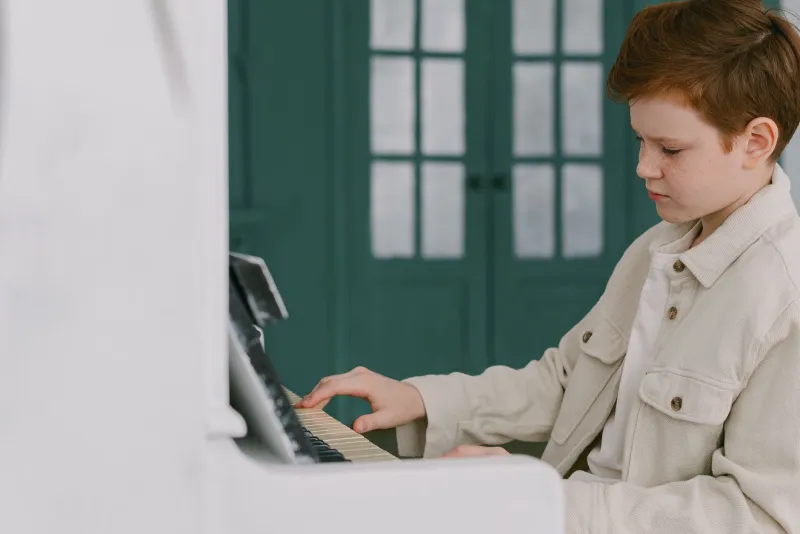
It usually starts pretty simply. A parent signs their kid up for piano lessons, maybe because the child asked, maybe because someone recommended it, or maybe just because it seemed like a good idea at the time. Nobody really expects much beyond some after-school structure and maybe a holiday recital performance.
But then something unexpected happens.
Dad starts humming along during practice. Mom pulls out the old guitar she hasn't touched since college. Little brother decides he wants to try drums. And suddenly, a house that used to be background noise and Netflix becomes something that actually sounds like music.
This is the ripple effect — and it's one of the most beautiful, underappreciated things about starting music lessons with your child.
When the Student Becomes the Teacher
One of the first things families notice is a shift in household dynamics. The child who used to be the youngest, the quietest, or the one who just kind of followed along suddenly has something to share. They know things the rest of the family doesn't. They can explain what a time signature is, demonstrate a chord, or play a melody everyone recognizes.
That's a big deal for a kid.
A mom here in Katy described it perfectly when she said her eight-year-old daughter started giving the family "mini concerts" every Friday evening after her weekly lessons. "She'd announce it like a show," she said, laughing. "She'd make us sit on the couch and everything. But honestly? We looked forward to it. It became our thing."
That sense of ownership — of having something meaningful to contribute — quietly builds confidence in ways that extend far beyond the music room.
Parents Rediscovering Old Passions
Here's something nobody really warns you about when you enroll your child in lessons: you might catch the bug yourself.
It happens more than you'd think. A parent sits nearby during practice, half-listening, half-scrolling their phone — and then one day they find themselves actually paying attention. They start remembering the years they spent on piano as a kid, or the guitar they gave up in high school because "life got busy." And something stirs.
One Katy dad shared that watching his son work through beginner guitar lessons made him realize he'd always regretted quitting as a teenager. Within a few months, he'd signed himself up for adult lessons. "My son thought it was the coolest thing," he said. "We started practicing together on weekends. It honestly changed our relationship."
That's not a rare story. Music has a way of reopening doors that people quietly closed years ago. And when a parent re-engages with something they once loved, kids pick up on that energy immediately. It sends a powerful message: music isn't just for beginners or children. It's for everyone, at every stage of life.
Siblings Who Can't Help But Join In
Ask any family with multiple kids what happened after the first child started lessons, and you'll hear some version of the same story. The younger sibling starts mimicking. The older sibling gets curious. Someone picks up the instrument when they think no one is watching.
Siblings are natural imitators, especially when they see something that looks fun and gets positive attention. Music lessons have a way of creating a kind of friendly household competition — not the stressful kind, but the kind where everyone just wants a turn.
A family in the Katy area signed up their middle child for violin lessons last year. Within six months, their older daughter had asked to try guitar, and their youngest was banging rhythms on every surface in the kitchen. "We went from zero musicians to basically a band," their mom joked. "I didn't see that coming at all."
What's interesting is that siblings don't always want to play the same instrument. Often, they deliberately choose something different — their own sound, their own identity within the family's musical world. That's actually a healthy thing. It means music becomes a shared language while still leaving room for individual expression.
The Kitchen Concert Phenomenon
There's a specific kind of magic that happens in families where music has taken root: the spontaneous, completely unplanned kitchen concert.
You know the one. Someone starts playing a chord progression at the table. Someone else starts humming. A sibling taps a beat on the countertop. And for a few minutes, everyone's doing something together — not because they planned it, not because anyone asked them to, but because the music just pulled them in.
These moments are small, but they're the kind of thing families remember for years. They're also a signal that music has moved beyond "an activity" and become part of the household's culture.
That cultural shift doesn't happen overnight. It builds gradually — through recitals, through practice routines, through the little wins and frustrations that come with learning something hard. But it does happen. And once it does, the whole household feels different.
What This Means for Your Family
If you're thinking about enrolling your child in lessons — or if you already have and you're wondering why it feels like more is changing than just their musical ability — this is why.
Music lessons are never really just about the student. They're an invitation for the whole family to engage with something that matters. They create shared experiences, spark conversations, and occasionally inspire someone who thought their musical chapter was closed to open it back up again.
The ripple effect is real. And honestly, it's one of the best parts.
At Katy Music Lessons, we see it all the time — families who came in for one lesson and left with a whole new household rhythm. Whether your child is just starting out or already a few years in, the story they're writing on their instrument is also quietly writing itself into the life of everyone around them.
Every note really does begin a new story. Sometimes it just starts more than one.