When the Whole House Plays: How Siblings Who Learn Music Together Change Everything
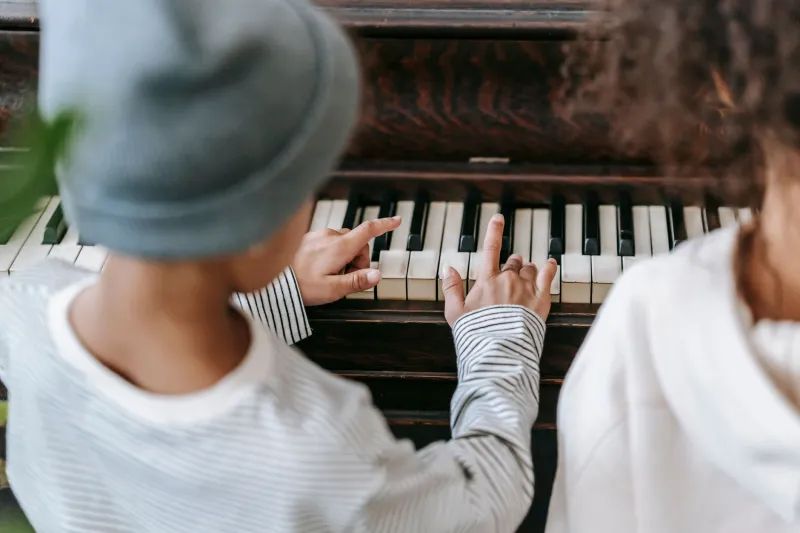
It started with one guitar. Then came the piano. By the time the third kid in the Morales household picked up the violin, their Katy home had quietly become something resembling a small conservatory — minus the formal dress code and with significantly more arguing over who got to use the metronome.
"We never planned for all three of them to be in lessons at the same time," says their mom, Renata. "One thing just led to another. But honestly? I wouldn't change it. The way they interact now is completely different from before music came into the picture."
Stories like this one pop up constantly in neighborhoods across Katy. One child starts lessons, catches fire with it, and before long a younger sibling is tugging on a parent's sleeve asking when it's their turn. Or an older kid watches a younger one get started and suddenly rediscovers their own motivation. However it unfolds, the result tends to be the same: music doesn't just teach individual kids — it quietly rewires how siblings relate to one another.
The Built-In Practice Partner Nobody Talks About
One of the underrated perks of having multiple kids in lessons is that they suddenly have a ready-made audience and collaborator living right down the hall. Practice, which can feel like a lonely chore when you're the only musician in the house, takes on a whole new energy when a sibling is just as invested.
Eight-year-old Caleb and his ten-year-old sister Maya, both students at Katy Music Lessons, started playing piano about a year apart. Their dad, Jerome, says the shift in how they practice was almost immediate once both were enrolled.
"Maya used to disappear into her room and practice in total silence. Now she'll call Caleb in to listen to something she's working on. He gives her feedback — usually something like 'that part sounded weird' — but she takes it seriously coming from him," Jerome laughs. "And he practices more because he doesn't want to fall behind her."
That gentle competitive tension is something music teachers in Katy see regularly. It's not the cutthroat kind of competition that discourages kids — it's more like the low-stakes rivalry that exists naturally between siblings in sports or academics. The difference is that music gives them a shared language for it.
Should Lessons Be Staggered or Simultaneous? The Question Every Music Parent Asks
This is probably the most common logistical question parents face when a second (or third) child expresses interest in lessons. The honest answer is: it depends on your kids and your schedule, but there are some real advantages to both approaches.
Starting at the same time works well when siblings are close in age and temperament. They can motivate each other from day one, and parents only have to build one new routine into the family schedule. The downside is that younger or less naturally musical kids may feel discouraged if they're always being compared to a sibling who picks things up faster.
Staggering lessons by six months to a year gives each child a moment to establish their own identity as a musician before a sibling enters the picture. The older student often becomes an informal mentor — a role that benefits them just as much as it helps the younger one. Research consistently shows that teaching something to someone else is one of the most effective ways to deepen your own understanding of it.
Katy Music Lessons teachers often recommend staggering when there's a significant age gap, and simultaneous enrollment when siblings are within a couple years of each other and already have a collaborative relationship. But honestly, the best approach is the one your family will actually stick with.
The Shared Musical Memory You Don't Realize You're Building
There's a longer game being played here that's easy to miss when you're in the thick of scheduling lessons and reminding kids to practice. Music creates memories in a way that few other childhood experiences do.
Ask any adult who grew up in a musical household — even one where the music was imperfect and the practicing was inconsistent — and they'll tell you about a specific song, a specific moment, a specific afternoon when something clicked. Those memories tend to involve other people. A parent watching from the doorway. A sibling sitting on the floor listening. A holiday gathering where someone finally played the song they'd been working on for months.
When siblings learn music together, they're accumulating a shared archive of those moments. Years from now, they'll remember the summer they both tried to learn the same Beatles song. The recital where one of them forgot the ending and the other whispered the notes from the audience. The inside jokes that only make sense if you were both there, both playing, both part of the story.
"Music became this thing that belongs to all of them," says Renata Morales. "Even when they're fighting about everything else, they'll still sit down together and just... play. It's like a reset button for the whole house."
When One Sibling Pulls Ahead (and How to Handle It)
Not every sibling musical journey runs on parallel tracks, and that's okay — but it does require some thoughtful parenting. If one child advances quickly and another struggles, the comparison trap can become a real issue.
The key is resisting the urge to use one sibling's progress as a measuring stick for the other. Every child's musical timeline is genuinely different, shaped by factors ranging from the instrument they chose to the particular way their brain processes rhythm and pitch. A kid who seems "behind" at age seven may turn out to be the one who sticks with music longest.
Teachers at Katy Music Lessons make a point of celebrating each student's individual milestones rather than benchmarking them against peers — even peers who happen to share a last name and a bathroom. Parents can reinforce this at home by asking specific questions about what a child learned in their lesson rather than comparing performances.
The Ripple Effect Beyond the Music Room
Here's the thing that surprises parents most: the benefits of sibling music learning don't stay contained to music. Families consistently report improvements in how their kids communicate, negotiate, and support each other in completely unrelated areas of life.
When you've learned to give and receive feedback about something as personal as a musical performance, you get better at doing that in general. When you've cheered for a sibling at a recital, you understand what it feels like to be in the spotlight and how much it matters to have someone in your corner. Those are skills that transfer.
At Katy Music Lessons, we see it all the time — the kid who started lessons because their older sibling made it look cool, who ends up becoming the one who inspires the next generation of the family to pick up an instrument. Music has a way of moving through families like that, one story beginning where another one left off.
If you're wondering whether it's time to enroll a second (or third) child in lessons, the answer is almost always yes. The music they'll make individually matters. But the music they'll make together — and the relationship that grows around it — that's something else entirely.